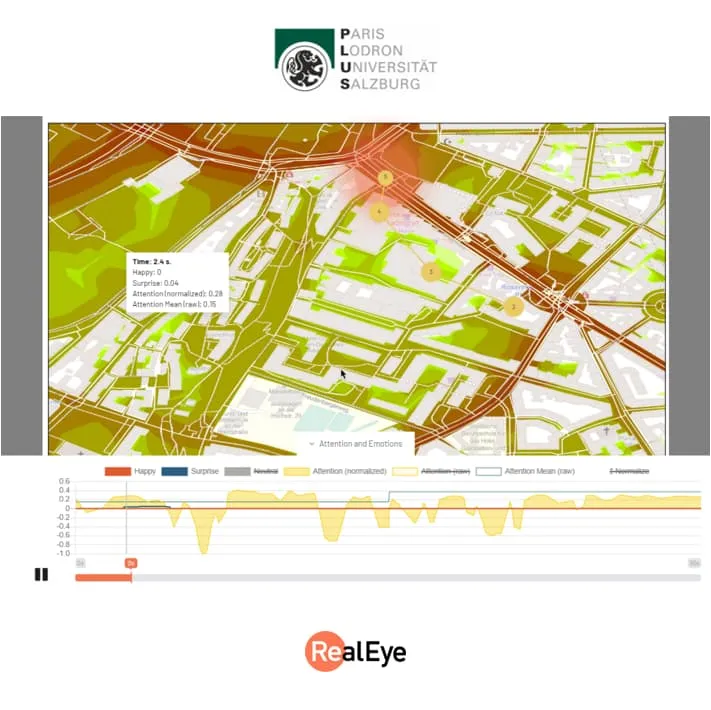
RealEye Device Comparison Test

This study compares eye-tracking data collected from four device types completing identical RealEye tests. The objective is to answer the following questions:
- How does data differ between desktops/laptops, tablets, and smartphones (vertical and horizontal)?
- How does eye-tracking data vary across participant groups (age, gender, buyers of a category/brand)?
Hypothesis: Eye movement is largely subconscious and therefore unlikely to be meaningfully influenced by demographic or purchasing behavior. For relevant use cases, three stimulus types were included. Each stimulus was tested across all devices (desktop/laptop, tablet, smartphone vertical, smartphone horizontal) and presented in both portrait and landscape formats where applicable.
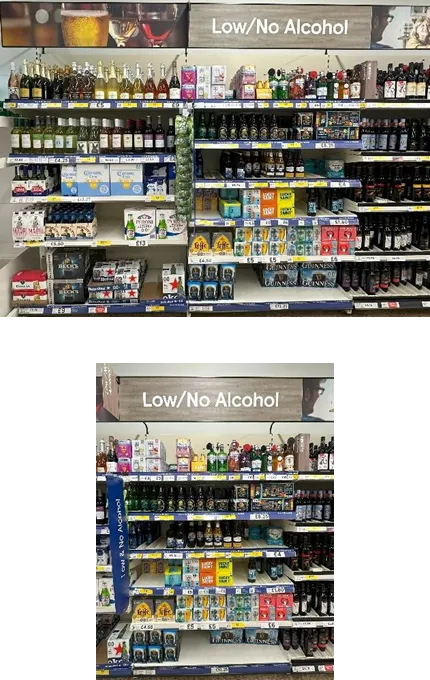
Shelf Test
POS Visibility / Assessment
Pack Assessment

Sample
A total sample of n = 400 participants was recruited via Prolific and split evenly across four cells (n = 100 per cell). Age and gender were controlled to a 50/50 split within each cell. Responses with quality scores classified as Low or Very Low were excluded, in line with standard project procedures.
Device Analysis & Correlations
Share of attention % = aoi_fixation_total_time_spent_ms presented as a percentage of the sum of aoi_fixation_total_time_spent_ms across all AOIs for the stimulus.
Shelf Test
Landscape Shelf Image
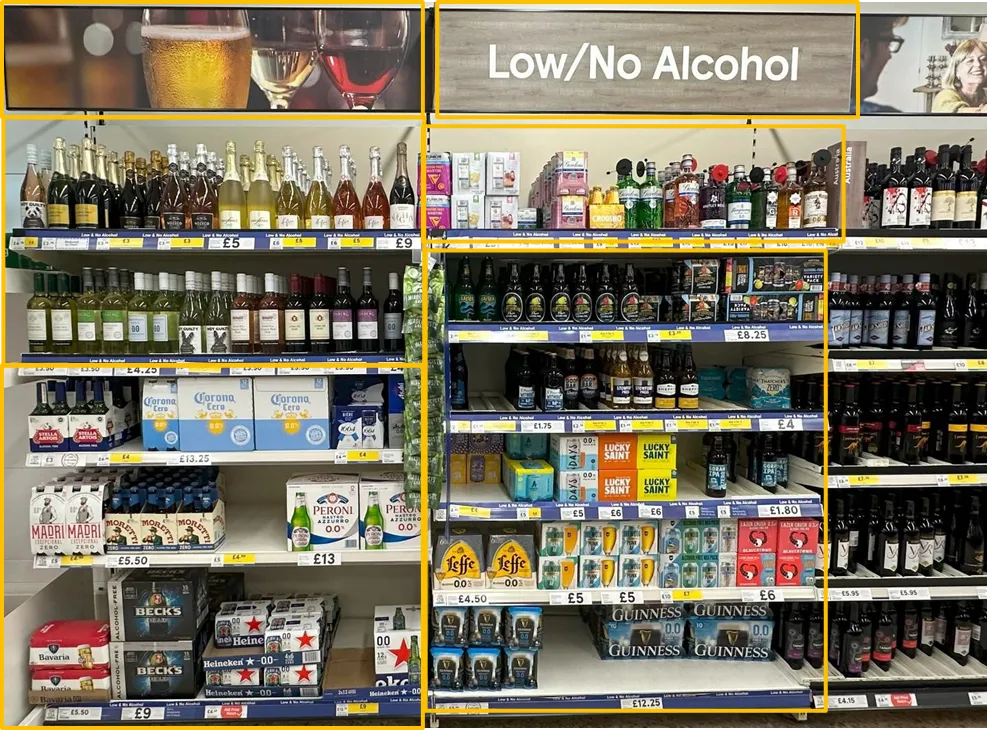
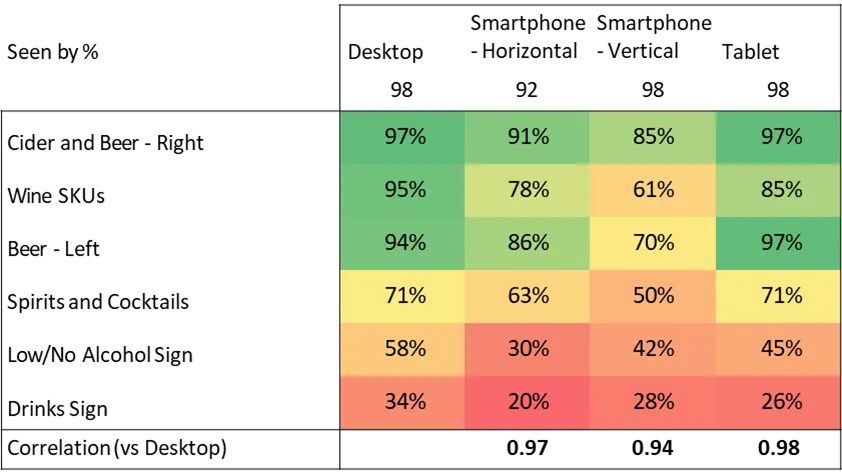
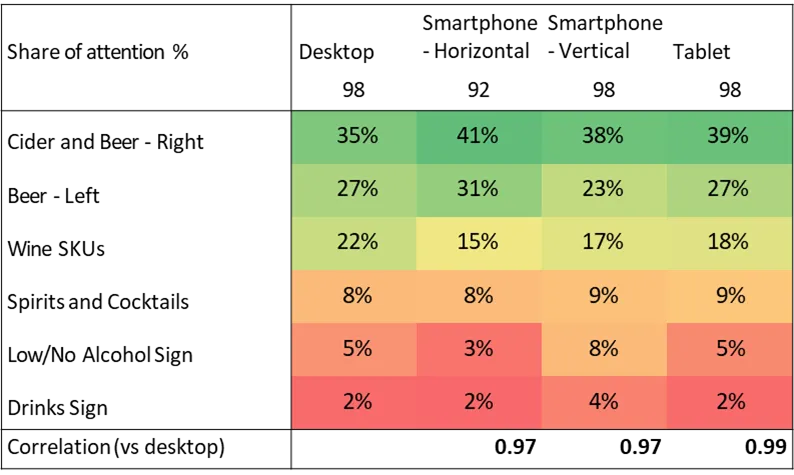
Correlation is best with Horizontal phones and tablets, worst with vertical smartphones (but still positive). Share of attention % data shows a slightly stronger correlation across device types, with horizontal and vertical smartphones correlating identically.
Portrait Shelf Image
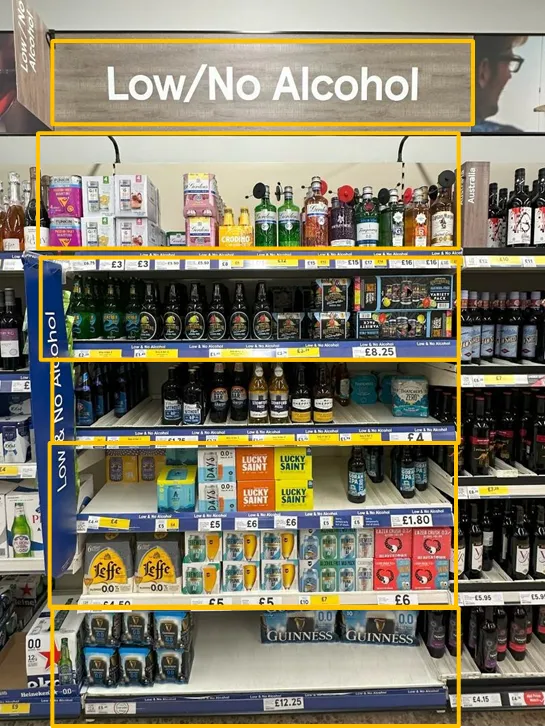
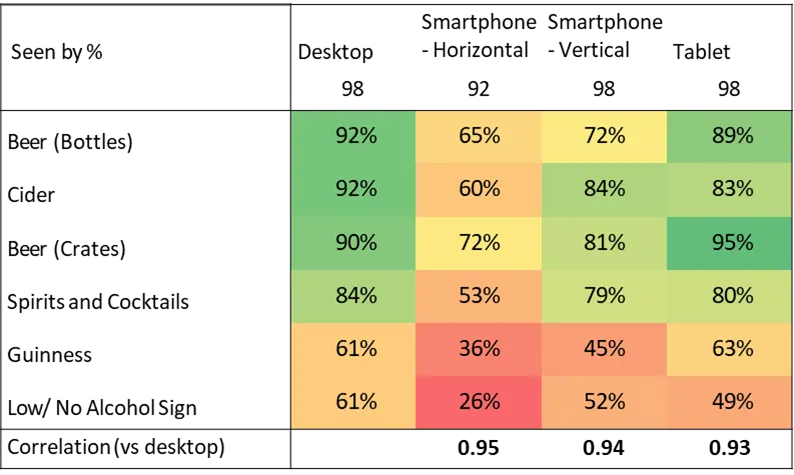
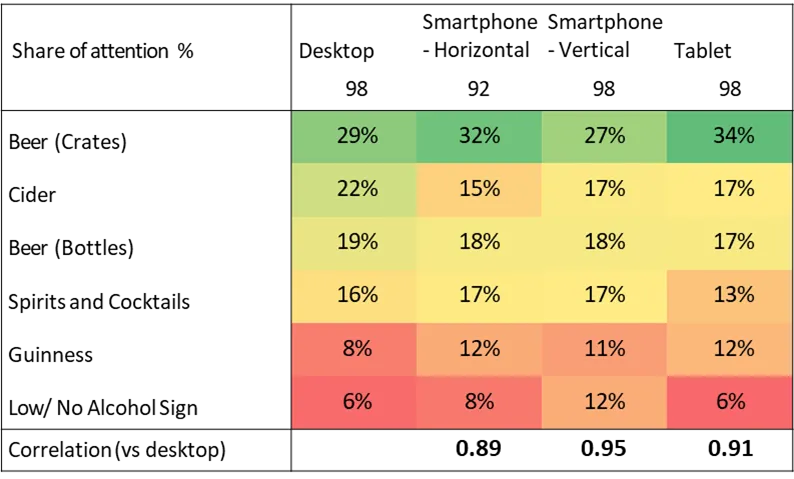
Surprisingly correlation is marginally better with horizontal smartphones vs vertical ones or tablets. However, absolute %s for vertical smartphones are closer to desktop than horizontal.
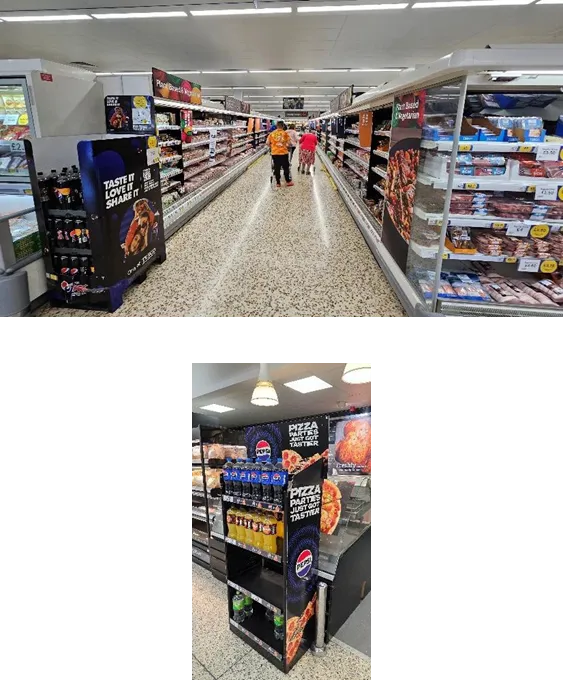
POS Visibility / Assessment
Landscape POS Image
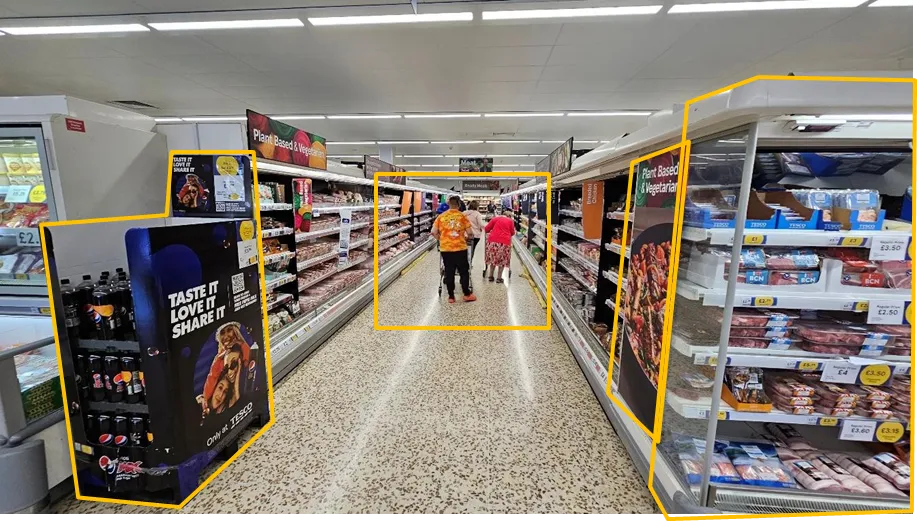
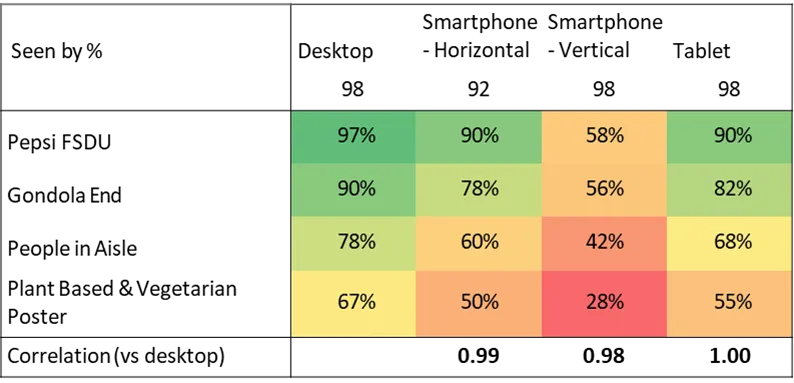
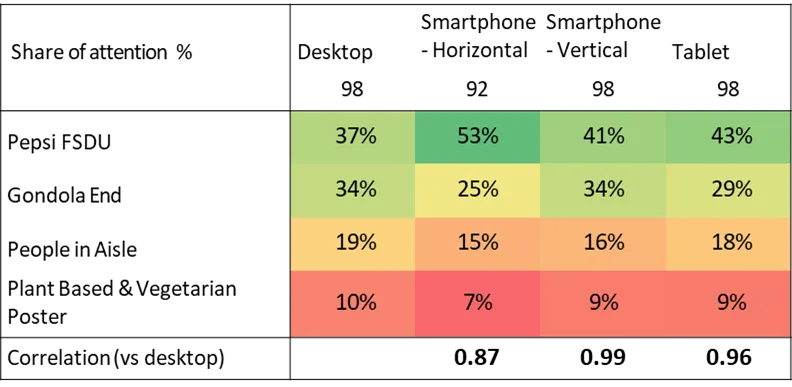
Clear AOIs provide very strong correlations, strongest on tablets. As AOIs become smaller differences increase, especially for vertical smartphones.
Portrait POS Image
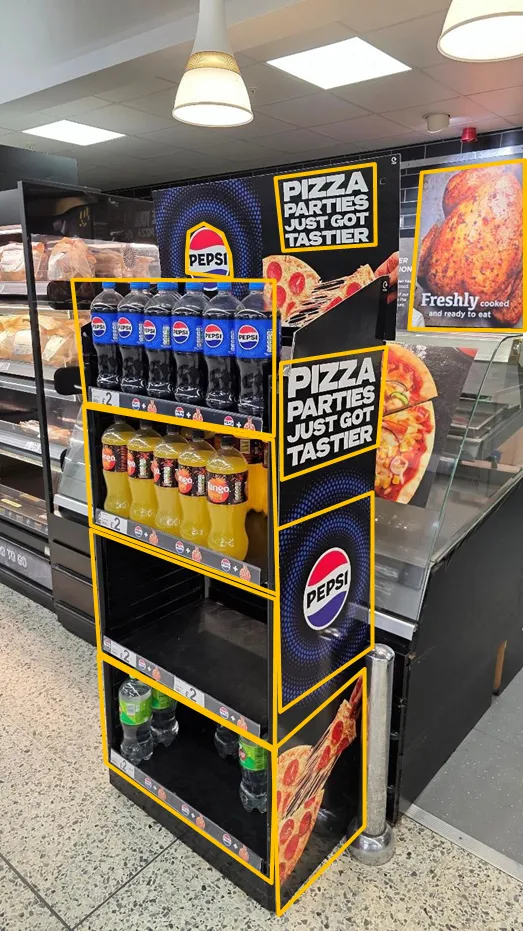
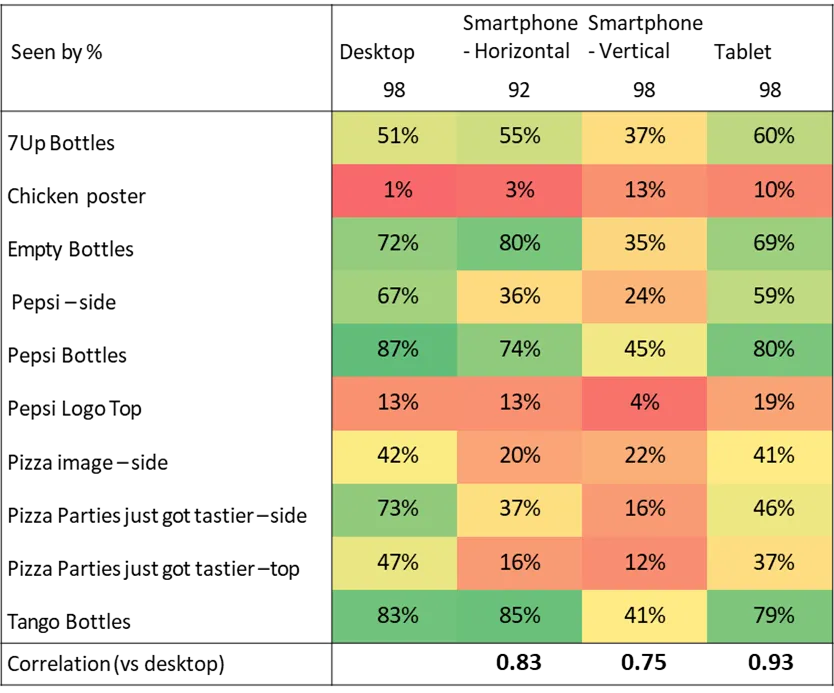
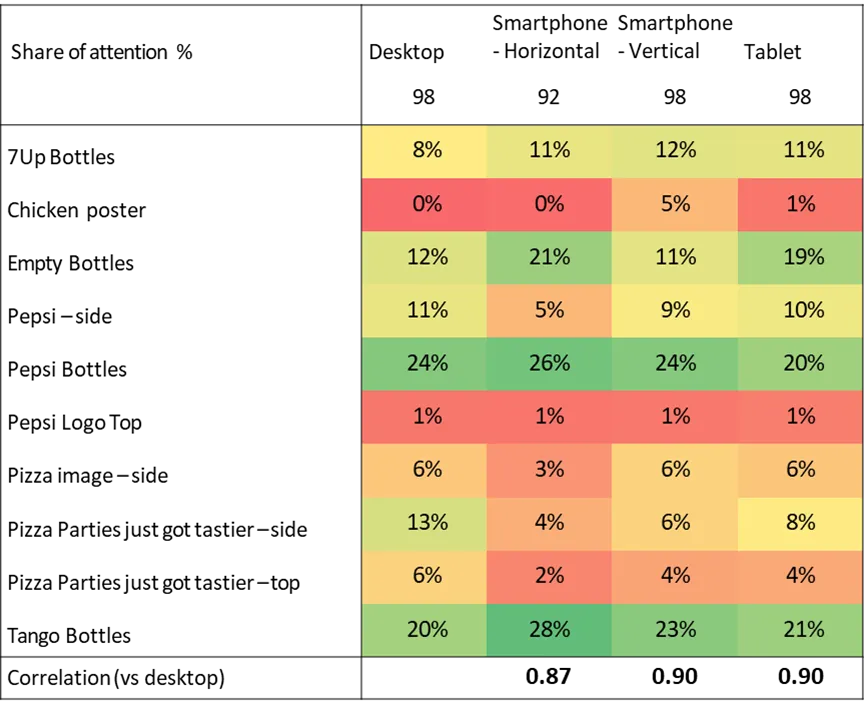
As AOIs become a little more detailed and smaller on screen there are weaker correlations. However, the horizontal orientation correlates more with desktops than vertical smartphones.
Pack Assessment
Landscape Pack Image
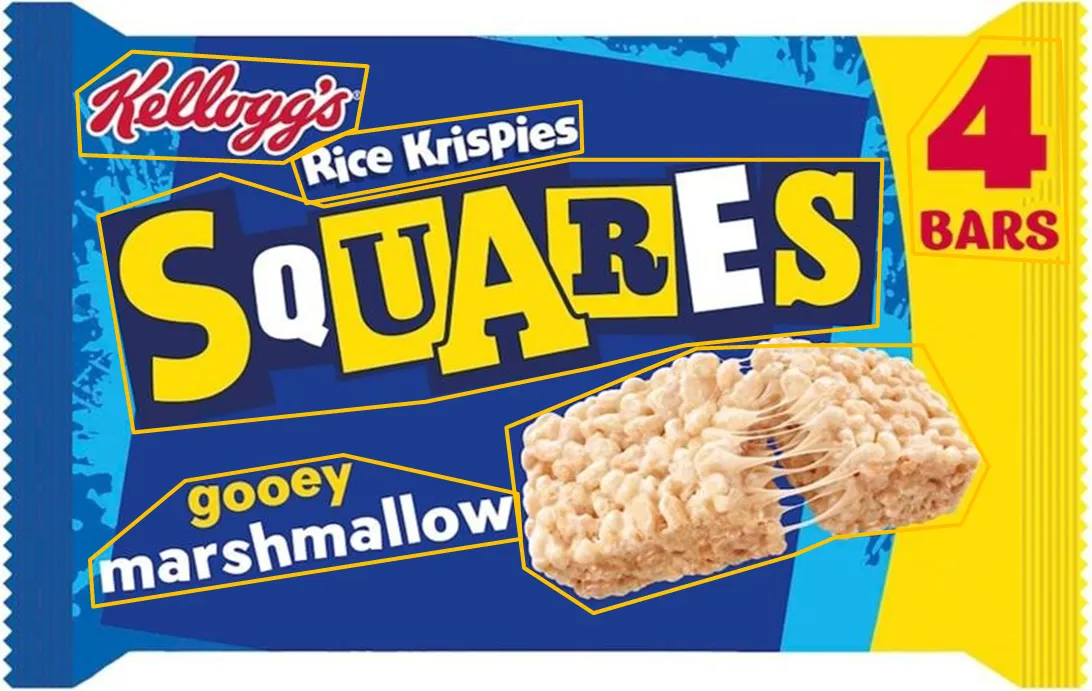
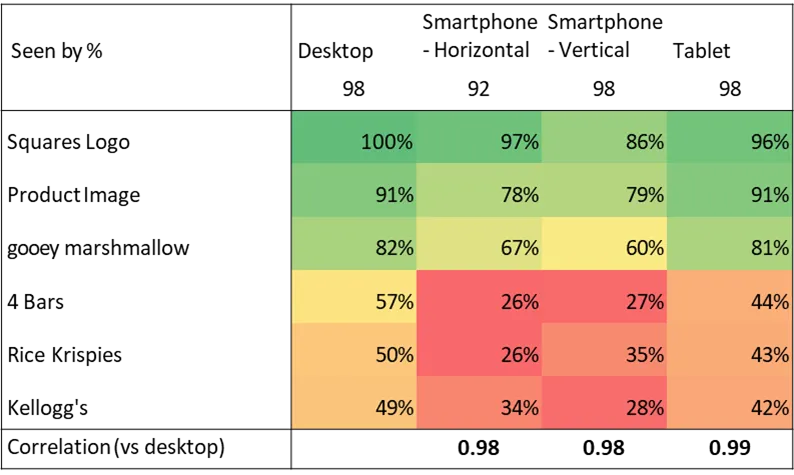
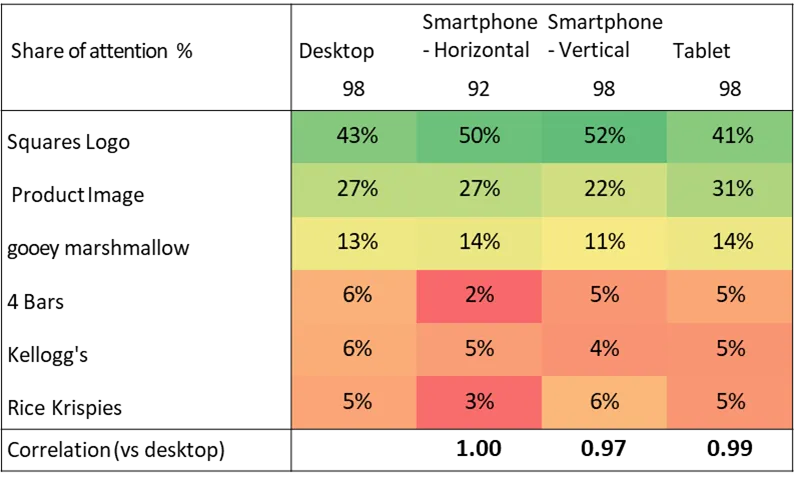
Strong correlations on all devices, with absolute numbers being closer on tablets.
Portrait Pack Image

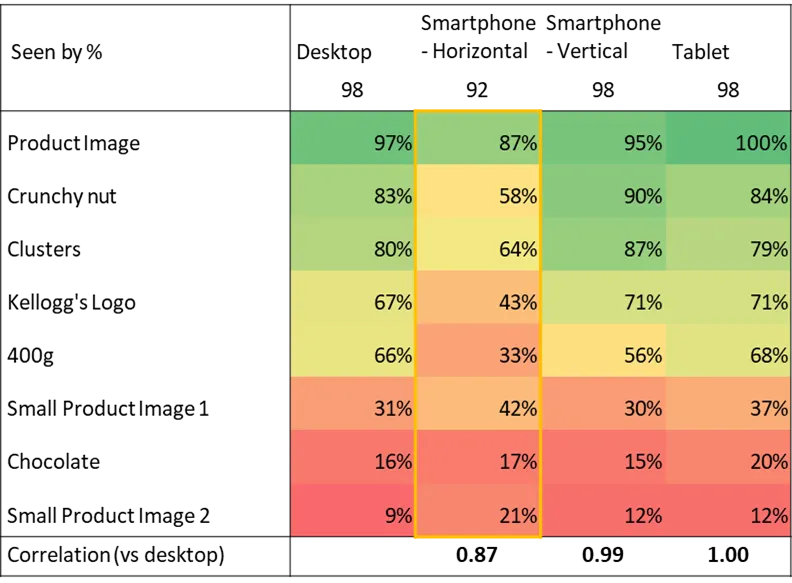
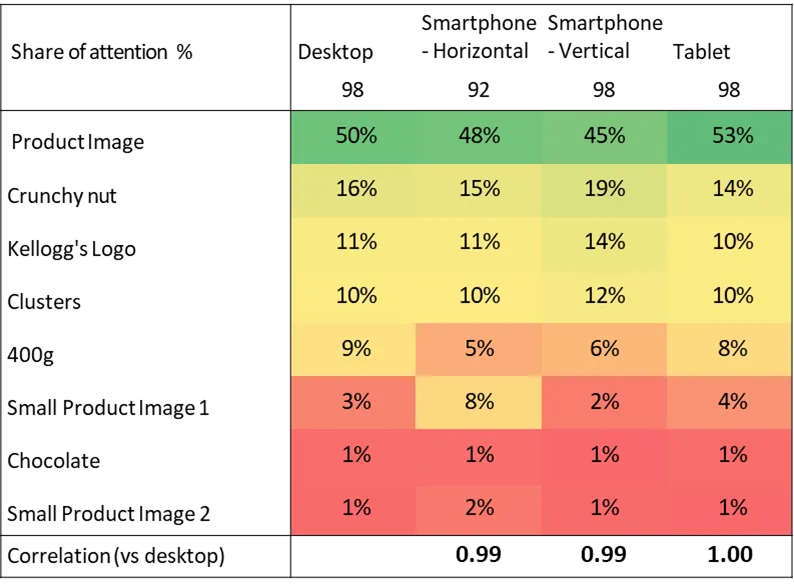
Horizontal phones appear to be a lot less compatible with vertical images, with many AOIs showing inconsistent data.
Cross-Stimulus Summary
Across both Seen By (%) and Share of Attention (%) metrics:
- Strong correlations are observed across all device types
- Landscape stimuli show greater consistency across device orientations
- Portrait stimuli perform less consistently when viewed on horizontal smartphones
Landscape Stimulus


Portrait Stimulus


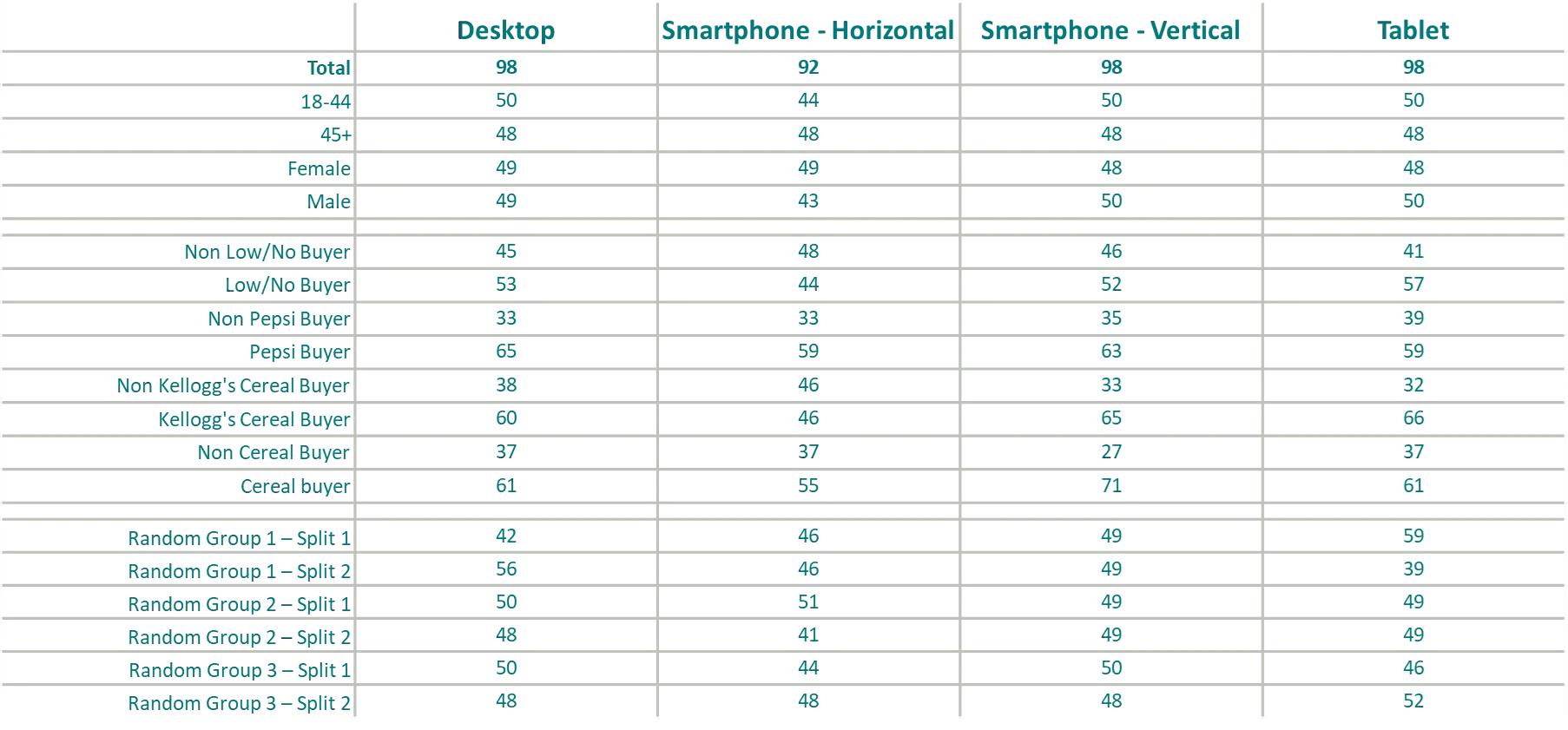
Participant Groups Analysis & Correlations
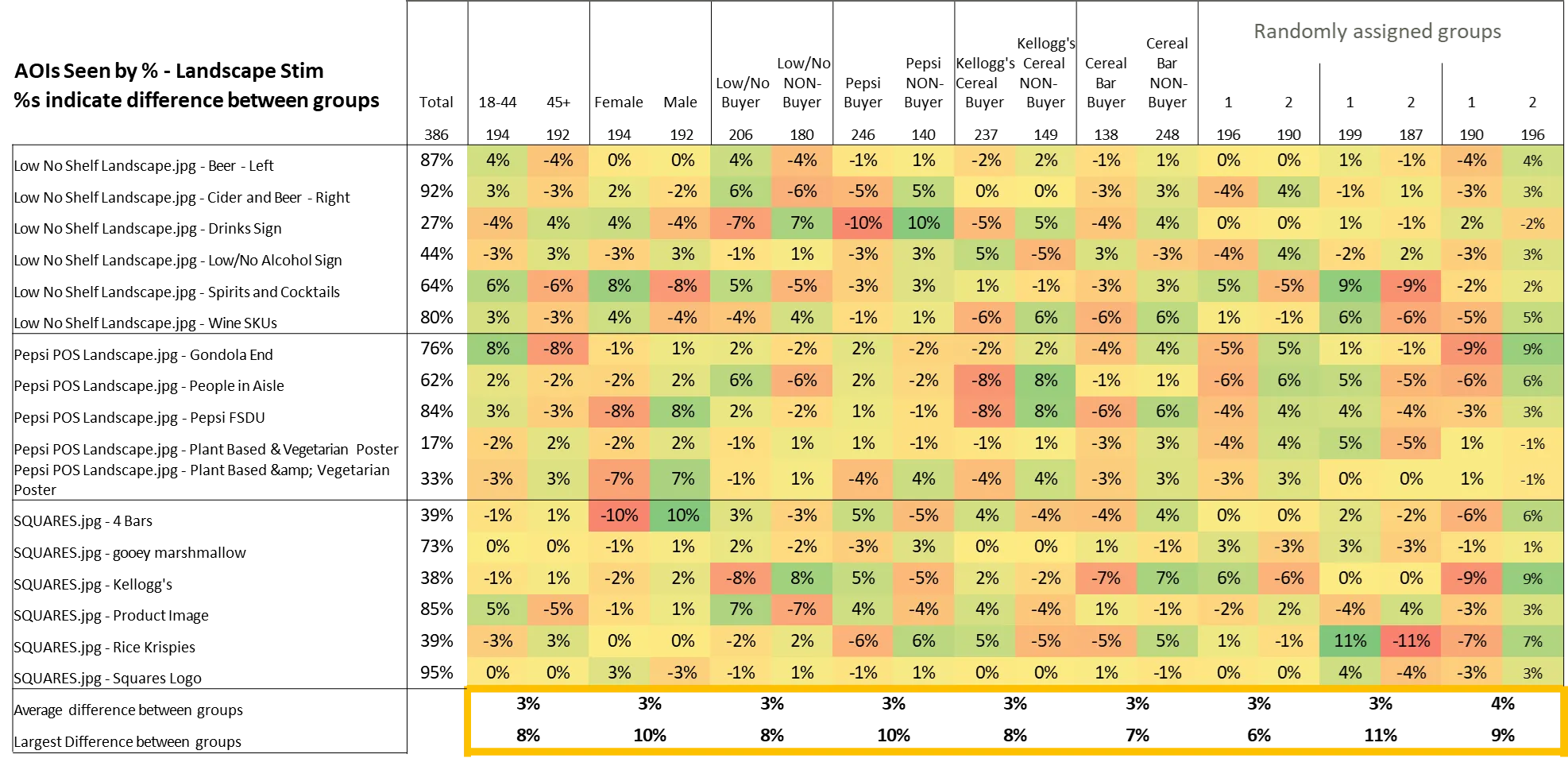
Consistently across analysis groups, the average difference is 3%, with a max of c.10% difference.
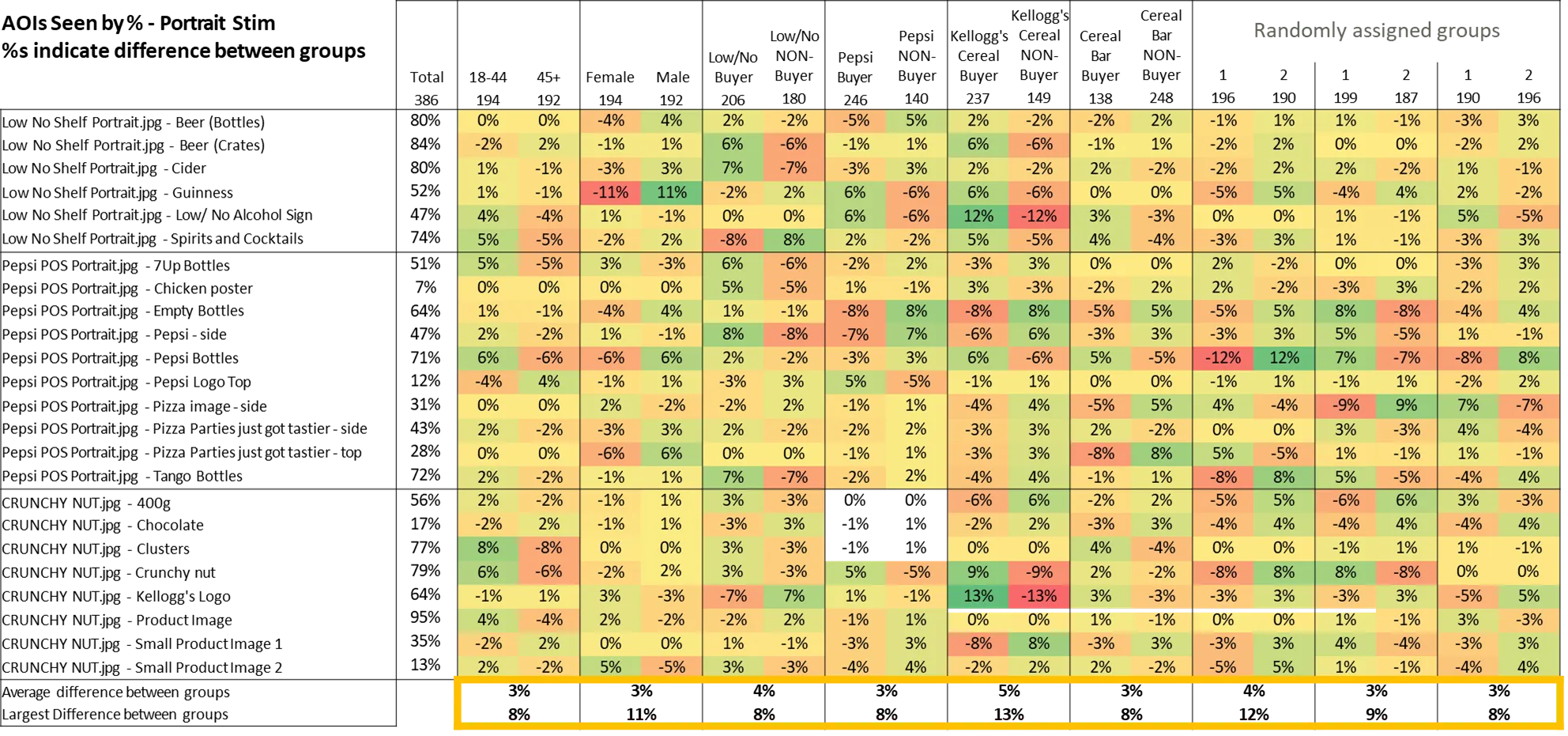
The same can be observed across portrait stimuli, with slightly higher max differences between groups.
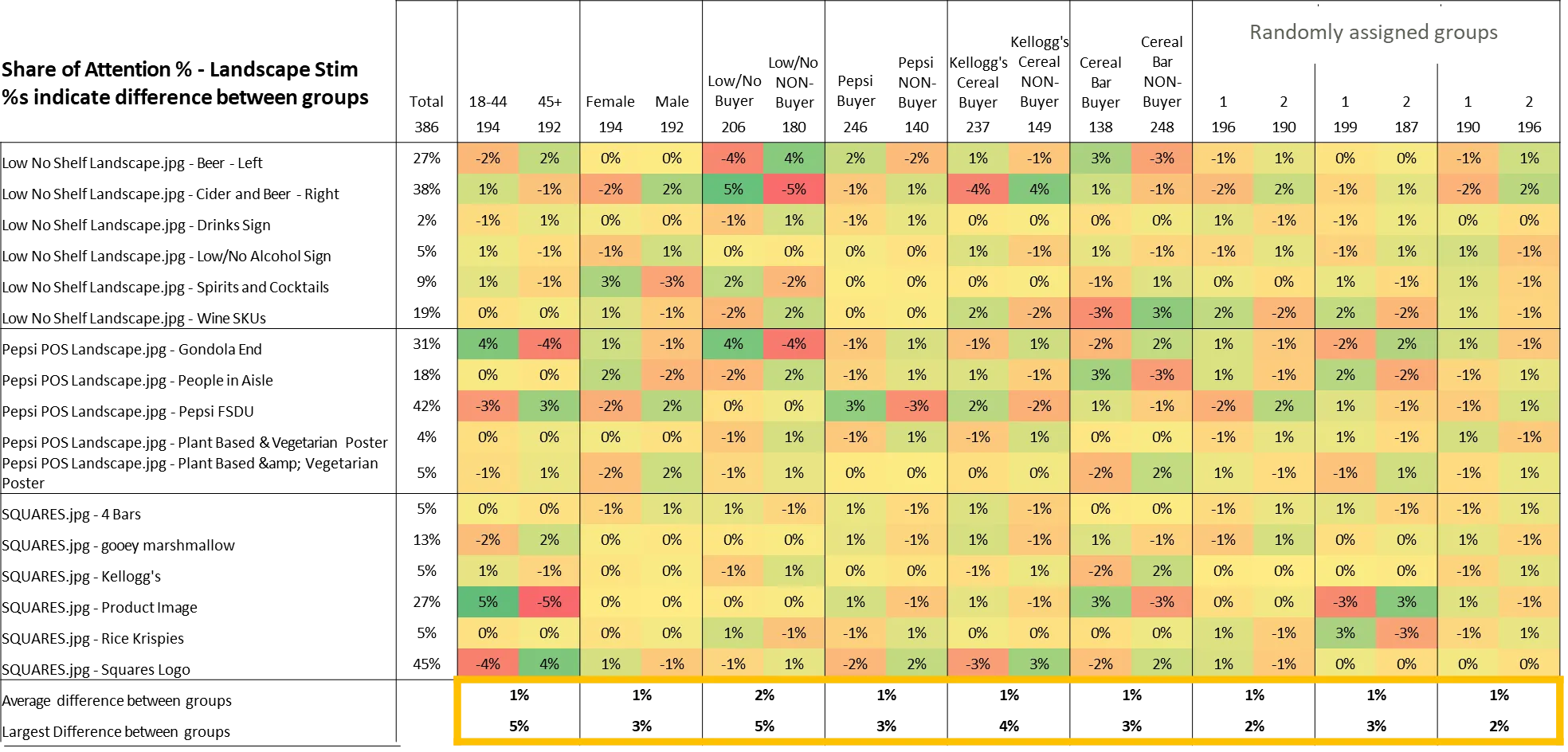
There are even smaller discrepancies when observing the differences across participant types.
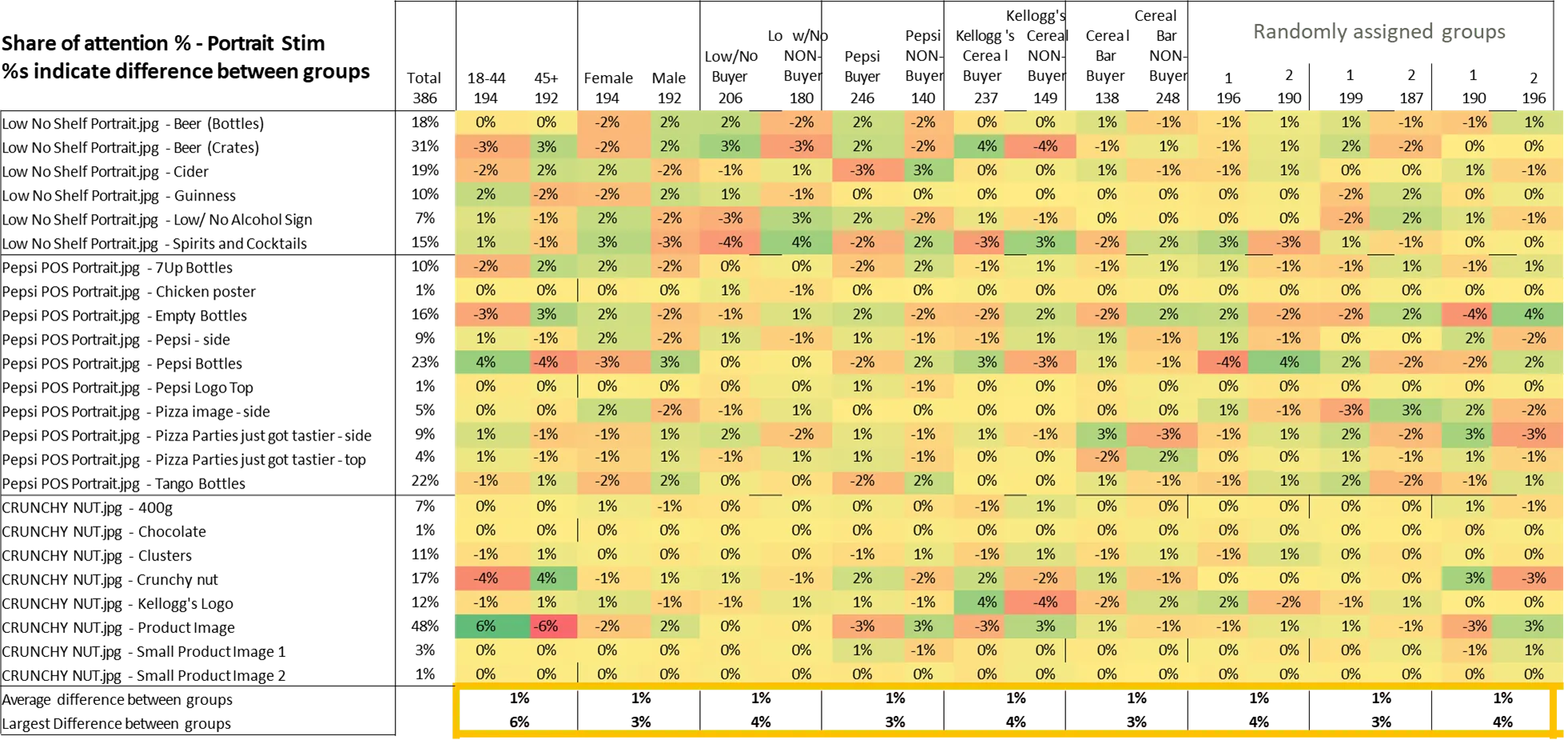
There are even smaller discrepancies when observing the differences across participant types.
Summary & Conclusions
- There are very strong correlations in eye-tracking data across all device types
- Lower correlations are observed in two mobile scenarios, suggesting some caution when interpreting certain mobile-only results
- Mobile data typically correlates at a similar level to tablets, which are already known to be highly accurate
- Including mobile devices—particularly when limiting to horizontal orientation—does not materially change conclusions drawn from the data
Participant Groups
- There is little evidence that demographics or purchasing behaviour meaningfully affect eye-tracking outcomes
- Eye movement patterns appear consistent across groups, supporting the original hypothesis
AOIs & Stimulus Design
- No strong relationship is observed between AOI size and data variance
- The AOI sizes used in this test are sufficient to maintain data quality across devices
Practical Recommendations
- All device types can be confidently used without compromising data quality
- Tablets produce results closest to desktops, with mobile devices also performing strongly
- Stimulus orientation should be aligned with allowed device orientation, e.g., use horizontal phones for landscape stimuli
Overall conclusion
This study demonstrates strong consistency in eye-tracking data across devices and participant groups. With appropriate consideration of stimulus orientation, mobile and tablet devices can be used effectively alongside desktops without detriment to insight quality.