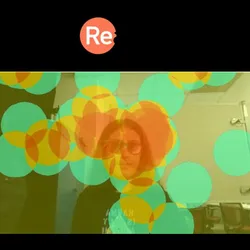
This study compares eye-tracking data collected from four device types (desktops/laptops, tablets, smartphones vertical/horizontal) completing identical RealEye tests. The results demonstrate strong consistency across devices and participant groups, with practical recommendations for cross-device eye-tracking research.
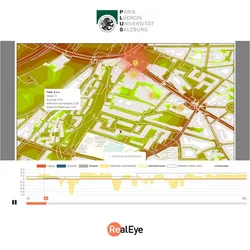
How do people read maps that show sound? And what happens when those maps contain uncertainty? This study focuses on how users interpret uncertainty in environmental noise models - visual maps that show road traffic noise across cities.
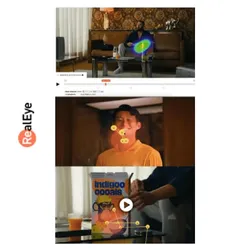
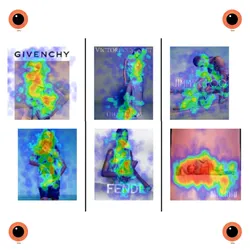
Research reveals the power of the center in vertical videos: viewers focus more, process content better, and stay engaged when the main subject stays in the middle rather than moving around.
Observe how pre-service chemistry teachers from non-science backgrounds approached problem solving. The research reveals how visual attention patterns relate to performance and highlights areas for better instructional support.
Ever wondered who’s really watching the ads during a Formula 1 race? 🏎️👀 Personalized digital billboards aren’t just clever - they work. Learn how fans’ eyes follow the action and which brands win the attention race.
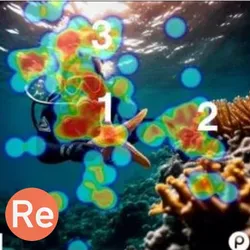
How do tourists really see - and feel about - their impact on nature? Combining immersive fieldwork with a 360° camera and RealEye eye-tracking revealed a surprising gap: tourists noticed wildlife interactions but often felt neutral or even joyful, even when behaviors might harm the environment. The results show that awareness alone isn’t enough - emotional connection is key to inspiring action.
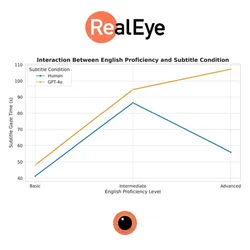
AI subtitles or human - who does it better? Eye-tracking data reveals surprising insights about viewer effort with GPT-4o Arabic subtitles. See how RealEye uncovered what your eyes are really doing.
Discover how RealEye helped reveal the power of AR in e-commerce—boosting user attention, emotion, and brand trust with eye tracking and facial expression analysis.
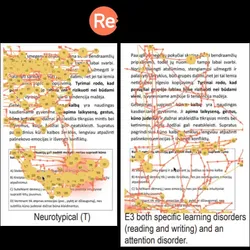
A study used RealEye to track how students with dyslexia and attention disorders read science texts. Highlighted text supported focus, while decorative images caused distraction. Eye-tracking revealed clear differences in reading patterns, helping identify which designs reduce cognitive load and improve accessibility for neurodivergent learners.
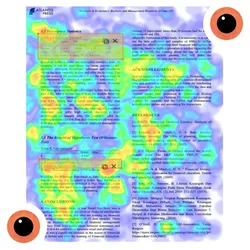
This study used RealEye's webcam-based eye-tracking to explore how adult learners engage with scientific articles and posters. The research reveals how layout design, language, and content placement influence attention and reading behavior - offering practical insights for educators designing digital learning materials.
A university study used RealEye to measure how people engage with static images and video content. This blog post breaks down the method, metrics, and how RealEye brought the insights to life.
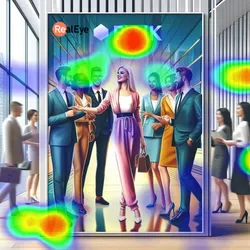
Can celebrities truly boost the impact of bank ads? A new study using RealEye eye tracking and facial coding reveals surprising insights - like why text outshines star power, and what really captures attention.
This study explored how consumers respond to logos from Apple, Samsung, Xiaomi, and Oppo. Through eye tracking and facial coding, researchers found that logo familiarity affects attention and emotion, offering insights for effective brand design.
Can a simple product label change how we feel and buy? A recent neuromarketing study says yes - and RealEye was right at the heart of the discovery :-)
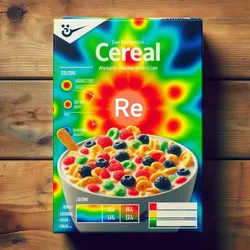
This neuroscience study explored how everyday visuals - like product packaging - capture our attention and influence what we remember, even without trying. Learn how eye-tracking and brain data revealed new insights into memory.
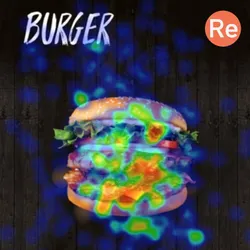
This study explores how visual design elements in food ads affect consumer attention and perception using eye-tracking technology. It identifies which ad features, like design complexity and authenticity, capture attention and how they influence consumer engagement and attitudes toward the product.
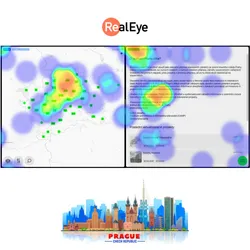
Discover how UX research improved the Praha Zítra web application for urban project transparency. Learn about key findings, user research, and design enhancements shaping Prague’s smart city initiatives.
Discover how RealEye eye-tracking technology was used to analyze visual attention in fashion ads and its impact on body image. This study reveals key insights into social comparison, the drive for thinness, and ethical marketing strategies.
This Eye-tracking study using RealEye reveals usability challenges in YouTube’s Clip feature, highlighting user attention patterns and UI improvement needs.
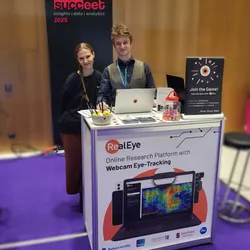
RealEye had a great time at succeet25 in Wiesbaden, Germany, where we presented our webcam-based eye-tracking. We demonstrated how it helps improve UX research, ad testing, and marketing strategies by providing valuable insights into customer behavior. Exciting future innovations ahead!
🚀 Big News! RealEye has secured EU funding to enhance webcam eye-tracking using machine learning! This project will improve calibration speed, accuracy, and usability, making research more precise and accessible.
This study explored how RealEye eye-tracking helps analyze ESP students' interactions with multimodal websites. It highlighted the importance of text and layout design in engaging learners, offering personalized learning, and enhancing material design.
A study using RealEye eye tracking investigated how individuals with varying levels of art expertise perceive abstract art. The research focused on the Gestalt principle of proximity, examining how participants grouped visual elements in the artwork.
Eye-tracking used to analyze how minimalist and diverse environments shape user attention and perception. Do neutral spaces centralize attention? Do diverse spaces encourage exploration? Key elements like color, texture, and symbolic design trigger cognitive engagement, highlighting the role of neurodesign in creating emotionally engaging, memorable environments.
RealEye’s eye-tracking technology was used to evaluate Traveloka's Car Rental feature. Metrics like gaze on screen, heatmaps, and emotional analysis revealed user difficulties with login and finding the rental feature. The study recommends improving feature visibility and simplifying login to enhance user experience and reduce confusion.
A study used RealEye eye-tracking to explore how specific neighborhood elements like trash, RVs, and construction sites affect people's perceptions of urban environments. By combining gaze patterns with surveys, researchers linked visual attention to emotional responses, offering insights to improve urban planning and create cleaner, safer, and more inviting cities.
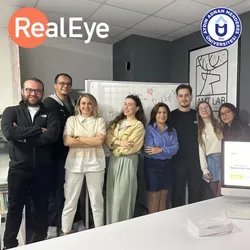
Discover how Turkish researchers are using RealEye webcam-based eye-tracking technology to explore visual attention across media, psychology, and political campaigns.
RealEye’s eye-tracking technology was used to analyze user interaction with the National Gallery of Indonesia’s Instagram. Metrics like gaze count, fixation count, and heatmaps revealed that visual content and exhibitions captured the most attention. Older users engaged more deeply, while younger users browsed faster, highlighting age-related differences in behavior.
The study used RealEye's eye-tracking technology to analyze attentional mechanisms and working memory efficiency across adulthood. It found that attention remains stable with age, while working memory declines.
A study used RealEye eye-tracking to explore how subtitles impact language learning. Findings revealed greater reliance on subtitles without audio, higher cognitive effort for Spanish than Arabic subtitles, and improved comprehension without audio distractions. RealEye enabled detailed insights into subtitle processing and the interplay of auditory and visual inputs.
A study using RealEye eye-tracking explored how Generation Z students engage with educational materials. It found that alternating text and images was most effective for diverse learning preferences, emphasizing the importance of personalizing content to improve engagement and retention in modern education.
This study analyzed how consumers engage with promotional and welcome emails from fashion brands. It tracked eye movements to explore which elements of emails capture attention, providing insights for improving email marketing strategies and increasing engagement.
In this study, RealEye was used to track how participants engage with disinformation. The study found that bold headlines, sensational images, and celebrity figures captured the most attention, while critical details like altered logos and suspicious sources were often overlooked. These findings suggest a need for stronger media literacy to help viewers recognize subtle signs of manipulation.
This study uses eye-tracking technology to explore the impact of Artificial Intelligence (AI) and Explainable AI (XAI) on dermatologists' melanoma diagnoses. It focuses on how eye movement patterns reflect their engagement with AI tools.
A study explores the connection between visual attention and emotion regulation in children aged 3 to 8. Using the RealEye eye-tracking platform, researchers examined how children's gaze patterns towards emotional faces are linked to their emotional regulation skills. The findings suggest that children with higher emotion dysregulation (ED) show less visual attention to negative emotions like anger, especially in younger children, indicating that visual avoidance might be a strategy to cope with unpleasant emotions. This research highlights the potential of eye-tracking tools like RealEye for early screening of ED-related mental health issues in children.
Eye-tracking and AHP analysis revealed how e-commerce users engage with product listing pages. The list layout drew more attention to price and reviews, while the grid layout highlighted visual content and CTA buttons. These insights offer e-commerce platforms clear strategies to optimize their PLP design for higher sales and engagement.
A study by Martínez Núñez (2024) used RealEye eye-tracking to analyze consumer engagement with textile ads. It found which elements attracted the most attention, and which were overlooked. The insights of this research highlight the importance of strategic ad design for improving engagement and conversion rates.
The analysis of how multimedia signals affect student attention and learning. By tracking eye movements during educational videos, the study identified elements that enhance engagement and retention, offering insights for improving online learning materials.
Choosing a celebrity’s gender for FMCG ads is a strategic challenge. Most research has focused on comparing celebrities with non-celebrities, overlooking the impact of male versus female endorsers. The study by Sinha, M., Misra, M. & Mishra, S. (2024) fills that gap using RealEye and surveys to analyze how a celebrity’s gender affects consumer attention and trust.
Explore how SMA Negeri 1 Sokaraja improved their website's usability using RealEye. This study highlights the effective placement of several website elements and the need for better engagement in other sections. By analyzing user focus and interaction, the researchers identified areas for enhancement to boost user satisfaction and website performance.
A study tracked university students' eye movements to analyze their responses to cyber-attacks like phishing, open Wi-Fi, password leaks, and bait attacks. Heatmaps generated from the data showed which areas of the screen captured the most attention, revealing key vulnerabilities and the need for better cybersecurity awareness and user interface improvements.