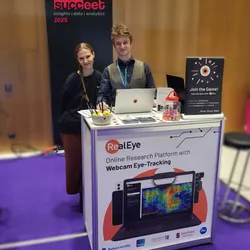
RealEye had a great time at succeet25 in Wiesbaden, Germany, where we presented our webcam-based eye-tracking. We demonstrated how it helps improve UX research, ad testing, and marketing strategies by providing valuable insights into customer behavior. Exciting future innovations ahead!
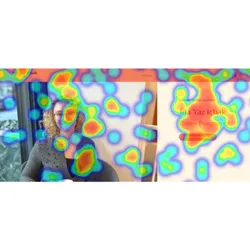
Ida, a freelance therapist in Turkey, faced challenges with her website’s performance. Neuromarketer Irene Centenaro utilized RealEye.io’s eye-tracking to diagnose the issues. The analysis highlighted key areas for improvement, helping Ida enhance user engagement and lead conversion.
Learn about the seven universal facial expressions. They are key in understanding human emotions and are used in RealEye’s facial expression recognition system to analyze visual attention and emotional impact.
Stuck with GazeRecorder? Explore a world of possibilities! This article unveils the best GazeRecorder alternatives, featuring tools like Tobii, GP3 Eye Tracker, RealEye and Crazy Egg. We compare features, use cases, and functionalities to help you find the perfect eye-tracking software for your research needs.
In the hunt for a GazeRecorder replacement? This post unveils RealEye, a robust eye tracking tool. We compare RealEye and GazeRecorder feature-by-feature in a handy table, making it easy to see how RealEye goes beyond recording eye movements to uncover insights into visual attention and emotional impact for a richer understanding of user behavior.
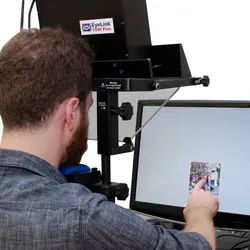
Unsatisfied with traditional eye tracking solutions? Explore a wider range of options! This article delves into powerful alternatives that offer valuable insights into user behavior, all without breaking the bank.
Even though Tobii Pro offers good-quality eye trackers, they may have downsides. We've gathered a list of tools that could solve the obstacles you encountered using Tobi Pro. Check out our lists of alternatives and competing tools and software.
IMotion is quite often chosen by market research and academic researchers; however, it has some drawbacks. We present iMotions alternatives that can solve some of iMotions problems.
If you have heard about eye tracking but are not quite sure what it is or what it can be used for – fear not! Here you can learn more about what kind of data is collected, how it can be modelled and analysed, and what are its application fields and further research perspectives.
In a creative process, designers show final ideas with drawings or digital formats. These formats help to talk about ideas with other people involved in the project. They used to agree on the final design before testing it. These images are called mockups.
In social science, the choice of research method can shape the results of your study. That's why understanding the primary differences between quantitative and qualitative research becomes necessary. Unraveling the nuances between these two methods illustrates the core of academic exploration and the diverse complexity of knowledge construction.
The marketing world is highly competitive. Agencies, freelancers and companies are in a neck-and-neck race to design campaigns that resonate with their audience needs. The key element in achieving this goal is an extensive research that needs to be conducted before your team begins their work.
While you may believe that you know everything about your target audience and understand your market, the truth is that their preferences and the existing market landscape are constantly evolving. Without sufficient data to support your decisions, even a small miscalculation can lead you astray.
Packaging design is a critical factor in the success of Fast-Moving Consumer Goods (FMCG) products, influencing customer purchasing decisions. Eye-tracking technology has emerged as a powerful tool for testing packaging design, offering insights into customer perception and behavior. This technology provides comprehensive, objective, and cost-effective data, helping FMCG companies create standout packaging designs and gain a competitive advantage in the market.
In this comprehensive guide, we will explore the intricacies of market research, covering essential topics from asking the right research questions to implementing findings and monitoring trends.
Before conducting shopper research, companies need to understand how customers use their products. A clear understanding of the consumption habits provides the basis for further action. A customer can be a whole family or just one person.
Nowadays, everything is fighting for our attention. Social media, advertising, and much more are trying to keep us as busy as possible. Understanding how we direct attention to something is essential knowledge from the perspective of scientific research in marketing or education. The foundation of this type of research is the assumption that there is a correlation between eye movements and attention.
Eye-tracking technology is a method of measuring and analyzing the movement of a person’s eyes. This technology is used in a variety of fields, including psychology, neuroscience, marketing, and human-computer interaction. In this article, we will provide a beginner’s guide to understanding eye-tracking technology.
When COVID-19 appeared, many activities were brought online. This applies to learning – schools and Universities had to find a way to fulfill their task without meeting students in person. Most of them, like the rest of the world, started using videoconference tools like ZOOM, MS Teams or Google Meet. But is teaching this way as effective as the traditional approach?
In the neuroscience and neuromarketing world, there was an increasing demand for measuring people’s attention level when they are being exposed to certain stimuli, i.e., to an advertisement. Attention is a cognitive process that tells us about somebody’s concentration and ability to process specific information actively. Considering the advertisement example, it’s crucial to not only know what people are looking at or what emotions it evokes but also to understand consumers’ dynamic of attention.